Choose Colours That Harmonise With Your Kitchen’s Style and Size

Choose Colours That Harmonise With Your Kitchen’s Style and Size
Colours have the power to transform the atmosphere of your kitchen. They influence how spacious it feels, how warm or cool the space appears, and even how inviting it is for family and guests. Whether you’re planning a full renovation or simply refreshing your cabinets and walls, choosing colours that suit both your kitchen’s style and size is key. Here’s how to find the perfect balance.
Begin with Your Kitchen’s Style
Your kitchen’s design sets the tone for your colour palette. A traditional Indian kitchen with carved wooden cabinets or brass accents often looks best with warm, earthy shades—think terracotta, cream, or muted greens. These tones highlight the natural materials and create a welcoming, timeless feel.
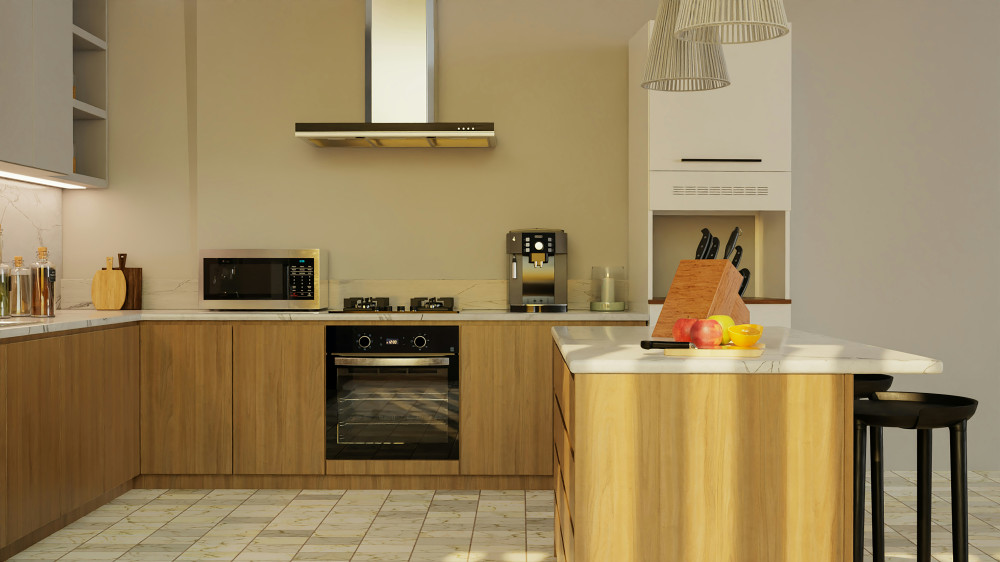
If your kitchen has a more contemporary look with sleek finishes and minimal detailing, you can experiment with bolder contrasts. Deep navy, charcoal, or even matte black can add sophistication, while crisp whites and cool greys enhance a clean, modern aesthetic. You might also introduce a pop of colour through a backsplash or an island counter to add personality without overwhelming the space.
Consider the Size and Light of the Room
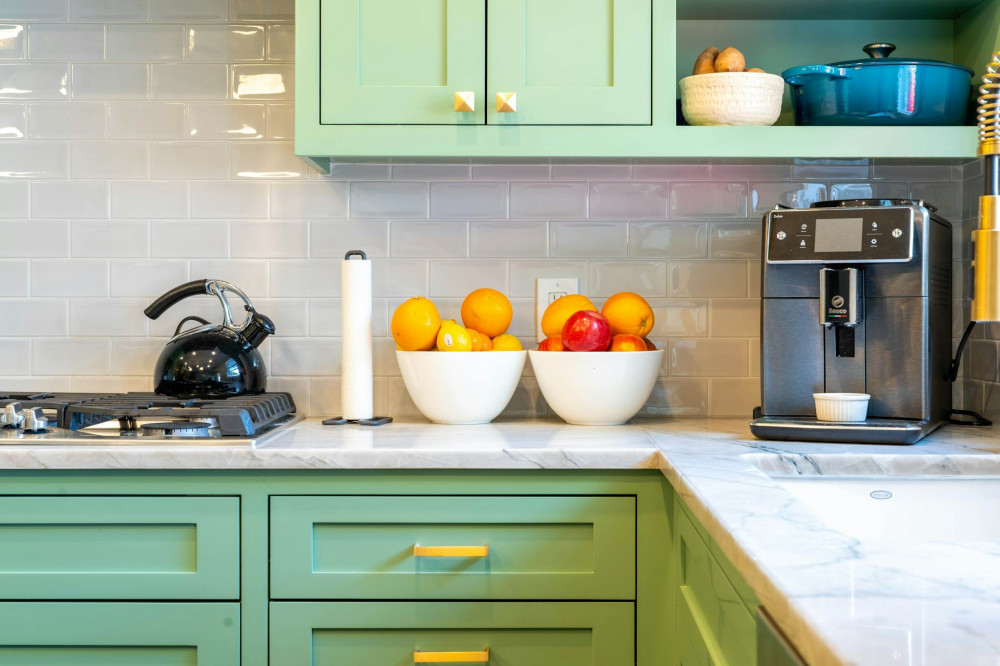
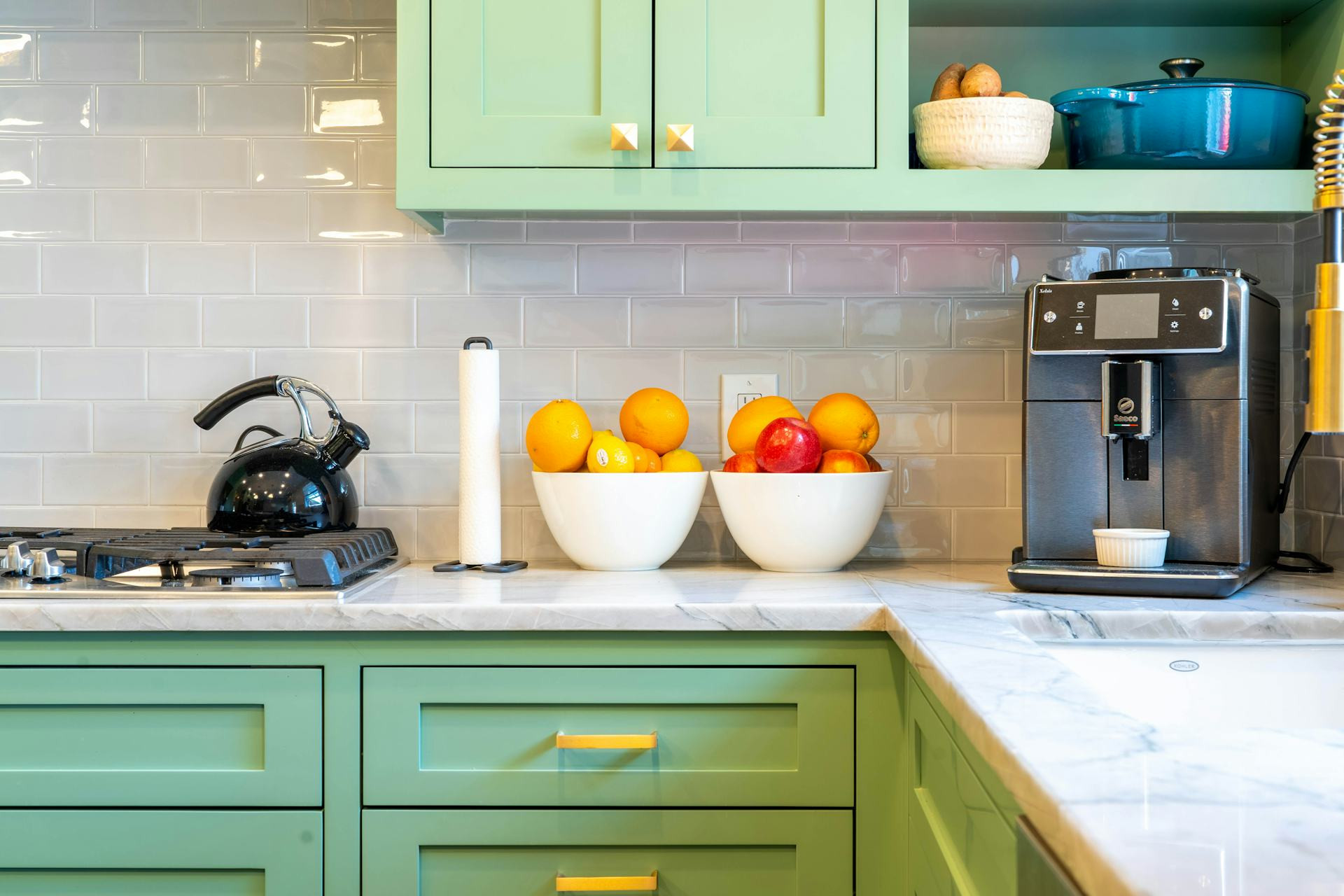
Colour can dramatically affect how large or small your kitchen feels. In compact Indian apartments, where kitchens are often modest in size, lighter shades can make the space appear more open. Off-white, pale beige, or soft pastel tones reflect light and create an airy impression. If you want a hint of colour, try light mint, peach, or sand tones that bring warmth without making the room feel crowded.
For larger kitchens, darker hues can add depth and intimacy. Deep green, indigo, or chocolate brown can make a spacious kitchen feel cosy and grounded. If your kitchen receives plenty of natural light—common in homes with large windows or open layouts—you can confidently use richer colours without losing brightness.
Balance Walls, Cabinets, and Flooring
A harmonious kitchen depends on how colours interact across different surfaces. If your cabinets are colourful—say, teal or mustard—keep the walls and flooring neutral to let the cabinetry stand out. Conversely, if your cabinets are white or wood-toned, you can use the wall colour to introduce contrast or warmth.
A useful approach is to work with tone-on-tone colours—different shades of the same hue—to create a calm, cohesive look. Alternatively, use complementary colours (opposites on the colour wheel) for a lively effect, such as pairing blue cabinets with a warm coral or terracotta wall.
Let Materials and Textures Add Colour
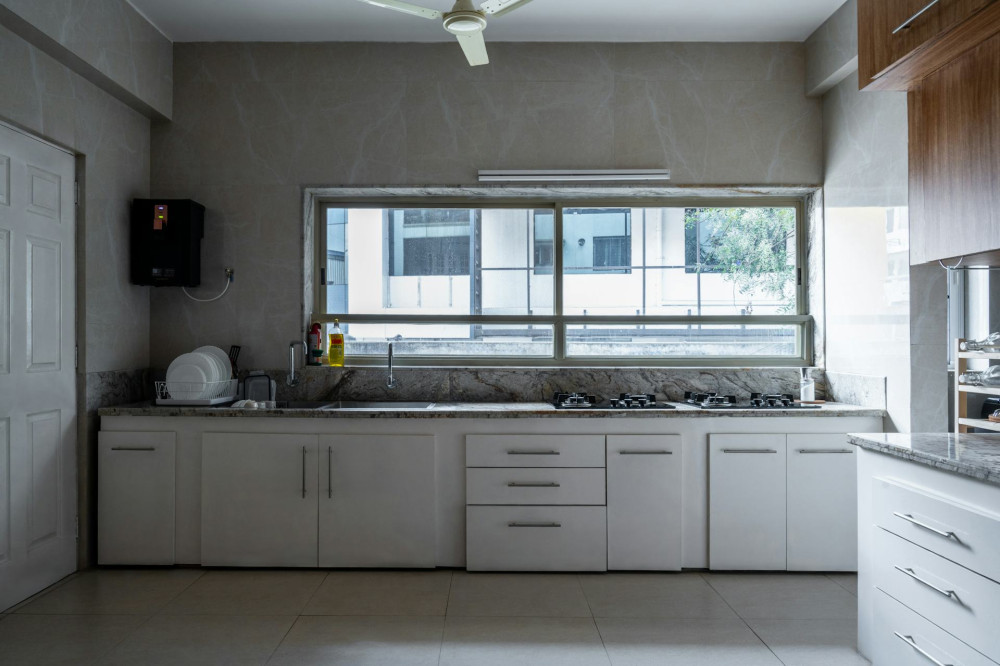
Colour isn’t limited to paint. Natural materials like wood, stone, and metal contribute to your kitchen’s palette. A granite countertop with subtle veining, a brass faucet, or a wooden breakfast counter can all influence the overall colour harmony.
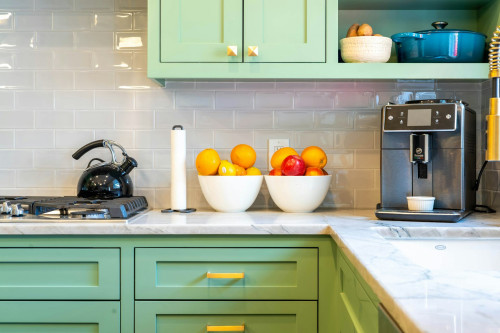
In Indian homes, where materials like marble, quartz, and stainless steel are popular, consider how their tones interact. A white marble countertop pairs beautifully with pastel cabinets, while darker granite can balance bright wall colours. Mixing textures—matte tiles with glossy finishes or metal accents with wood—adds depth and visual interest.
Læs også:
Use Lighting to Enhance Colour
Lighting can completely change how colours appear. Warm LED lights bring out yellow and red undertones, while cool white lights emphasise blues and greys. Always test your chosen colours under the lighting conditions in your kitchen—both during the day and at night.
Layered lighting works best: under-cabinet lights for task areas, pendant lamps over the island, and ambient ceiling lights to create an even glow. Thoughtful lighting not only improves functionality but also highlights your colour choices beautifully.
Make It Personal
While design trends can inspire, your kitchen should reflect your personality and lifestyle. If you love vibrant, energetic spaces, don’t shy away from bold colours like turmeric yellow or emerald green. If you prefer calm and simplicity, soft neutrals or muted tones might suit you better. The goal is to create a space where you feel comfortable and inspired every day.
If you’re uncertain, start small—paint one wall, change the cabinet handles, or add colourful textiles like curtains or rugs. These subtle touches can help you experiment before committing to a full colour scheme.
A Kitchen in Harmony
When colours, materials, and light work together, your kitchen feels balanced and inviting. A harmonious kitchen isn’t about following strict design rules—it’s about creating a space that fits your home’s proportions, your cooking habits, and your personal taste. With the right colours, even a small kitchen can feel bright and spacious, while a large one can feel warm and full of character.
Læs også: