Avoid Stains and Marks from Pots on Floors and Terraces

Avoid Stains and Marks from Pots on Floors and Terraces
Plants bring freshness and beauty to homes and outdoor spaces, but they can also leave behind unwanted stains and marks on floors, tiles, and terraces. In India’s warm and humid climate, moisture, minerals, and soil can easily seep through pots and create stubborn rings or patches. Fortunately, with a few simple precautions, you can keep your floors spotless while enjoying your greenery.
Why Do Stains and Marks Appear?
Most stains from pots are caused by water that seeps out through the bottom or sides of the pot. When the water evaporates, it leaves behind minerals, salts, and soil residues that cause discoloration. On tiled or stone terraces, this can appear as white or dark rings, while on marble or wooden floors, it can leave dull or discolored patches.
Clay pots, which are very popular in India, are porous and absorb water. This moisture slowly seeps out, especially during the monsoon season. Plastic pots retain water better but can still cause condensation marks if placed directly on cool surfaces.
Use Saucers and Plant Trays
The simplest way to prevent stains is to use saucers or trays under your pots. They collect excess water and protect the surface beneath. Choose saucers that fit the pot size properly so that they don’t overflow when you water your plants.
For large pots on terraces or balconies, plant trays with wheels are a great option. They make it easy to move heavy pots and allow air circulation underneath, helping water evaporate faster. This reduces the risk of damp patches, moss, or algae growth on tiles.
If you’re worried that the saucer itself might leave marks, place small rubber pads or felt protectors under it.
Create Air Space Beneath the Pot
Another effective trick is to raise the pot slightly so that air can circulate underneath. This helps the base dry faster and prevents moisture from seeping into the floor. You can use:
- Pot feet made of ceramic, plastic, or metal
- Small bricks or stones, especially for outdoor pots
- Wire stands or grids that lift the pot discreetly
Good air circulation is especially important in humid regions or during the rainy season.
Læs også:
Choose the Right Pot for the Setting
The material of the pot plays a big role in whether stains appear.
- Clay pots are traditional and breathable but absorb water easily. Use a plastic liner pot inside to prevent seepage.
- Plastic pots are lightweight and watertight, ideal for indoor use, but can cause condensation marks on delicate surfaces.
- Glazed ceramic or metal pots are easy to clean and rarely leave marks, but ensure they have drainage holes so water doesn’t collect at the bottom.
For terraces and balconies, choose pots with small built-in feet or drainage channels to allow water to flow away.
How to Remove Existing Stains
If stains have already formed, you can often remove them with mild cleaning methods:
- On tiles or stone: Scrub gently with a mixture of water and a little vinegar or baking soda. Rinse thoroughly.
- On marble: Use a pH-neutral cleaner and a soft cloth. Avoid acidic products, as they can damage the surface.
- On wooden floors: Wipe with a slightly damp cloth and a mild wood cleaner. Avoid excess water, which can worsen the damage.
For tough mineral deposits, use a specialized cleaner suitable for the surface, and always test it on a small area first.
Prevent with Smart Watering and Placement
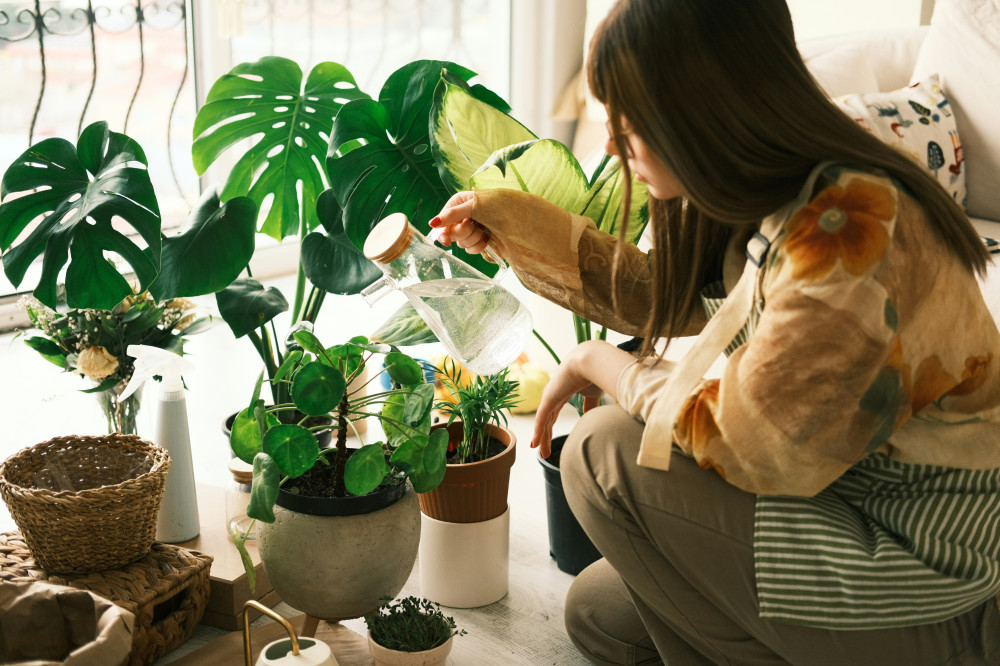
Overwatering is one of the main causes of stains. Make sure your pots have proper drainage holes, and water moderately rather than soaking the soil. A moisture meter can help you know when your plants actually need water.
Also, think about placement: avoid putting pots directly on light-colored marble, wooden floors, or porous tiles. A small mat, tray, or stand can make a big difference in protecting the surface.
A Simple Style Tip
If you want a neat and organized look on your terrace or balcony, group your pots together on trays or stands. It not only protects the floor but also makes cleaning easier and gives your space a stylish, cohesive appearance.
Enjoy Your Plants Without Worry
With a few easy steps, you can prevent the unsightly marks that often come with potted plants. Use saucers, allow airflow under pots, and choose materials suited to your environment. That way, you can enjoy your lush indoor plants and vibrant terrace garden—without worrying about stains or water marks.
Læs også: